Council's plan for millions in opioid settlement money takes shape
This week, Council will review a spending and saving plan for millions of dollars the city is expected to receive from national opioid lawsuits over the next decade.


This week, Council will review a spending and saving plan for millions of dollars the city is expected to receive from national opioid lawsuits over the next decade.

Costs for the project have increased by at least $11 million. Council needs to decide whether to move forward with securing and renovating a property at 200 West Vine Street.
The presentation analyzes the storm's impacts and outlines the city's future plans to protect flood-prone areas.

This week, Council will review a spending and saving plan for millions of dollars the city is expected to receive from national opioid lawsuits over the next decade.

On Tuesday, Council's Budget, Finance and Economic Development Committee will review plans for millions of dollars the city is receiving from national opioid lawsuits.
As meeting materials show, the city has received exactly $11,442,851.68 to date, and it's expected to see millions more through to 2038. The money is coming from opioid manufacturers and distributors, who are paying billions to state and local governments to resolve ongoing lawsuits across the country.
Council needs a plan for this money. Earlier this year, it directed some of it to local priorities. They included grants for nonprofits working to address the opioid crisis and implementing the Mayor's Homelessness Task Force recommendations as they relate to opioid abatement.
However, an ongoing topic of debate for Councilmembers is just how much of the money should go out to the community immediately and how much should be held in reserve, earning interest over several years to sustain the city's opioid abatement efforts long term.
Councilmembers also have several ideas for how to best spend the money. Priorities include supportive housing for people getting treatment, grants for nonprofits and supporting the city's Substance Use Disorder Intervention (SUDI) Program.
As the presentation lays out, Council has already established a few uses for the money the city had on hand.
Of the $11,442,851.68 the city has received so far, Council has directed:
Council needs to decide how it wants to assign the remaining $4,213,170.68. It will review several proposed uses for that money, spent over the next few budget years. They include:
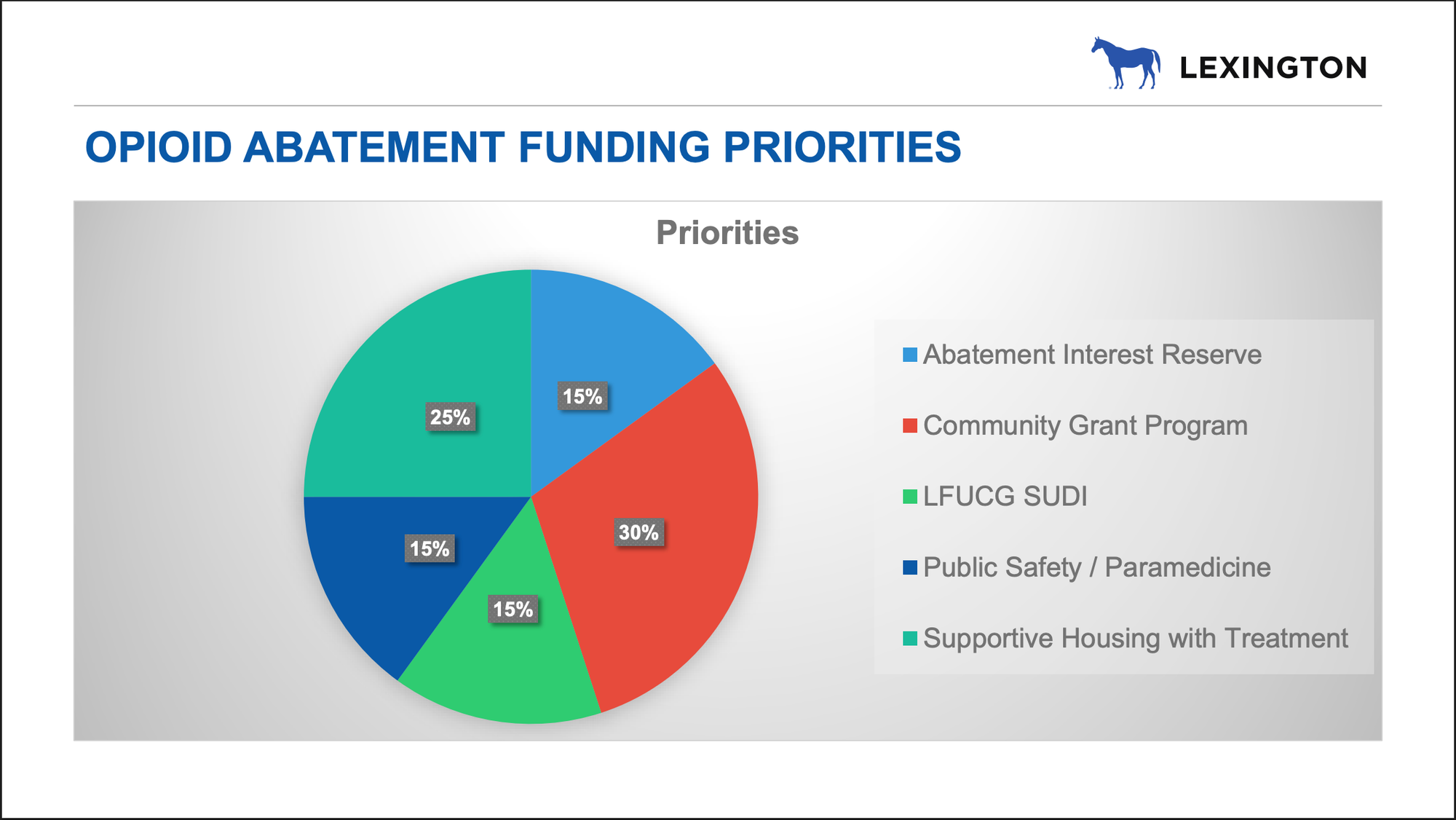
Additionally, Councilmembers are being asked to consider a new ordinance that would establish a special fund for all money received from national opioid settlements and create an endowment to help grow that money over time through interest.

Council signed off on plans to fund a community grant program and set aside money for a Homelessness Task Force.

The city shared its priorities for millions in national opioid settlement money this week, but several Urban County Councilmembers had questions about timing, public input and Council oversight.

The city expects $30 million over 18 years. It's outlined several priorities for how it wants to spend that money, with a focus on treatment and harm reduction.

Lexington used a $1 million public contract to wipe out millions in hospital bills. In Paducah, organizers are crowdfunding — hoping to clear a fraction of that total without city hall.
