Lexington has a new snow and ice plan. See what that means for your street
Lexington crews will treat priority streets earlier during winter storms. What else will be different?


Lexington crews will treat priority streets earlier during winter storms. What else will be different?

The Task Force has 5 priority and 15 long-term recommendations to address homelessness in Lexington.

After multiple challenging winter storms, Mayor Linda Gorton said she was "tearing up" the city's snow plan and starting over. Council will get a look at what's new Tuesday.
An existing LFUCG policy broadly outlines acceptable and prohibited uses for artificial intelligence for local government business. Here's what's in it.

This week, Lexington's Urban County Council will hear a presentation covering the local government's artificial intelligence policy, which outlines acceptable and prohibited uses for the technology, along with other uses it's currently considering.
The presentation from Chief Information Officer Liz Rodgers is on the agenda for Council's General Government and Planning Committee, which meets Tuesday, June 2nd at 1 p.m. The meeting will take place in the Council Chamber of Lexington's Government Center. You can attend in-person or watch it online via LexTV.
As artificial intelligence becomes more widespread, the Lexington-Fayette Urban County Government is exploring uses of the technology in its work.
In early May, Councilmembers heard from LFUCG Code Enforcement Director Oliver Steele, who described how the department wants to use artificial intelligence to identify enforcement "hotspots" around town and target them more proactively.
LFUCG's existing artificial intelligence policy dates to October 2025, and is subject to change as the technology evolves. The policy lays out some general ground rules for AI use. It outlines what is and isn't allowed, establishes requirements for human oversight, and bans inputting confidential, regulated, or proprietary information into any AI tool.
The policy's scope is broad, applying to LFUCG employees, interns, consultants, contractors, and third-party vendors. It covers AI usage "on any device, network, or system where the activity involves LFUCG data, systems, or business processes."
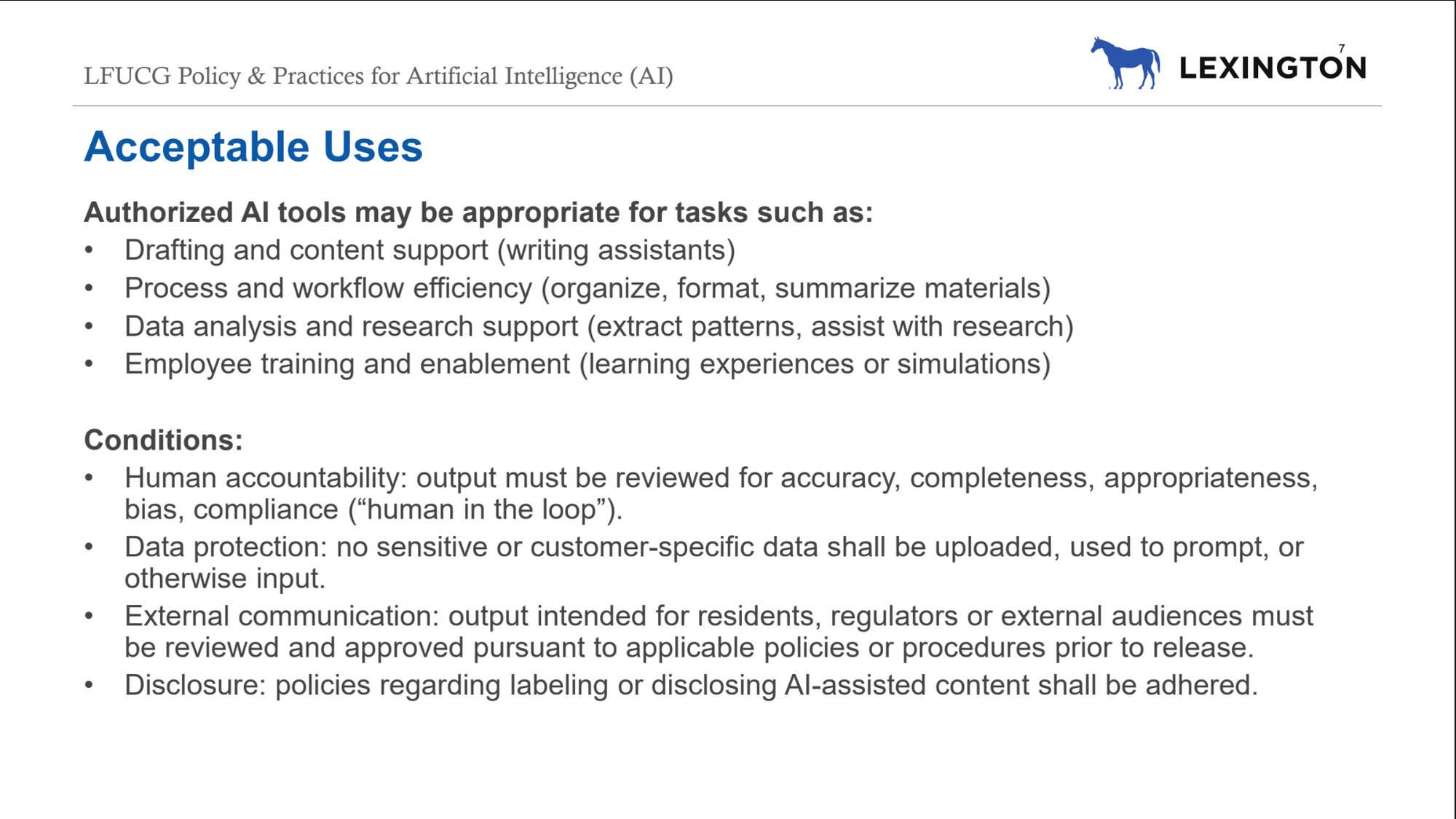
The presentation notes there are several acceptable uses for the technology, provided certain accountability and transparency conditions are met. They include:
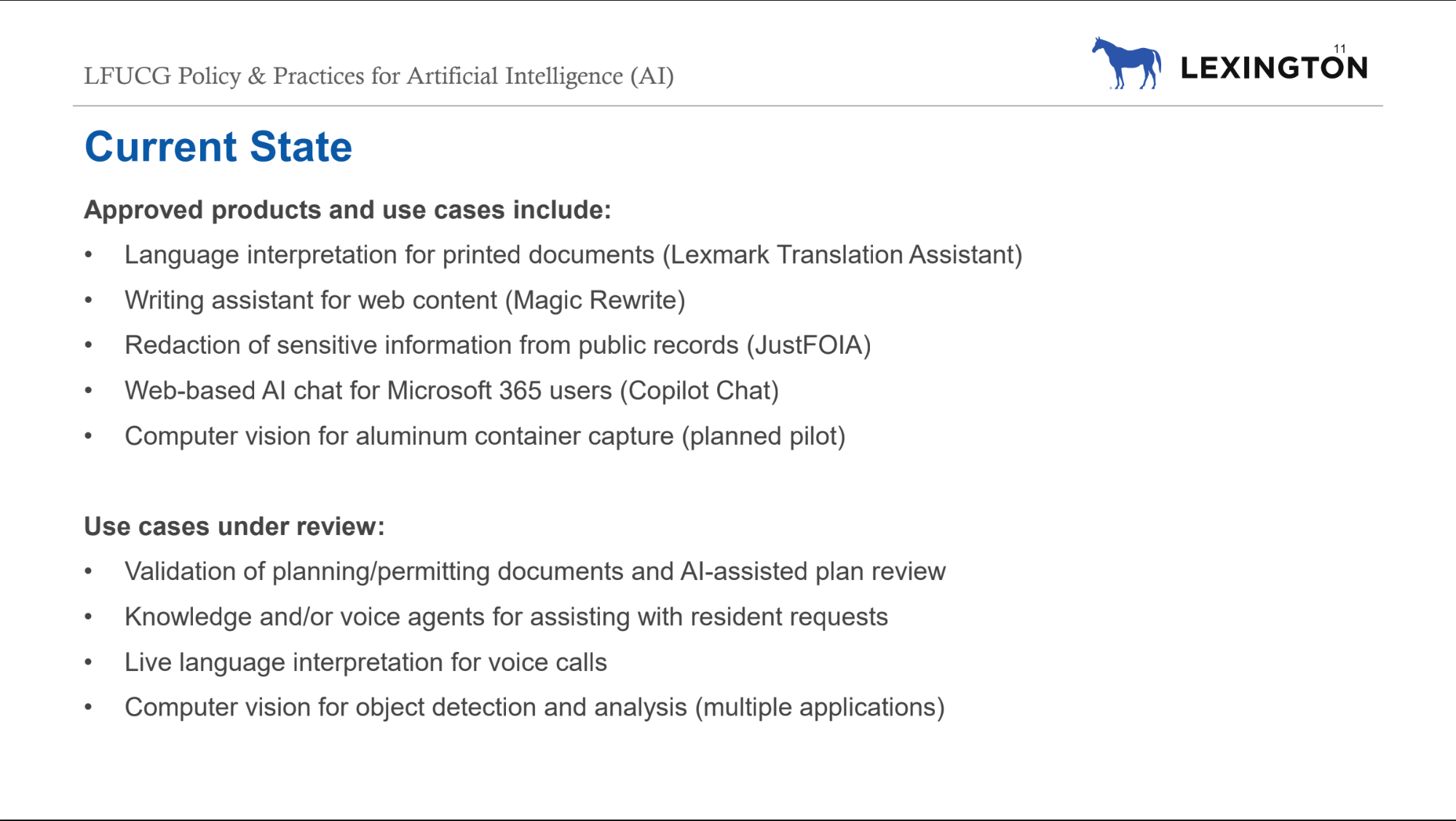
The presentation also notes several AI use cases currently under review, including AI-assisted review of planning and permitting documents, live language interpretation for voice calls, and AI agents that can assist with resident requests.
The following uses are strictly prohibited under the policy:
You can read the full policy and review the presentation to Council starting on page 3 of the meeting packet.

Councilmembers will get an update this week on plans for a new downtown Government Center on Vine Street, including the public-private partnership it relies on.

How should Lexington's streets be redesigned to work for cyclists, pedestrians, and public transit – not just cars? A draft design manual could shape road projects going forward.

Lexington needs to deal with the leaky sewage pump station behind Paul Laurence Dunbar High School to comply with an EPA Consent Decree.

Council signed off on plans to fund a community grant program and set aside money for a Homelessness Task Force.