Lexington used a $1 million public contract to wipe out millions in hospital bills. In Paducah, organizers are crowdfunding — hoping to clear a fraction of that total without city hall.
Lexington's payroll growth is expected to grow at a slower rate over the coming years, likely impacting the city's ability to create new positions and recurring programs.
Council will receive a six-month update on the city’s partnership with Undue Medical Debt, which purchases medical debt from healthcare providers like hospitals.
Update (01/19/2026) During its January 13 Work Session, Council heard updates on the city’s partnership with Undue Medical Debt, a nonprofit that buys and forgives medical debt for individuals.
No one shared public comment during the meeting; though some officials have raised questions about administrative fees for the program in previous meetings, these fees were not brought up during the Work Session.
This is expected to be the first of multiple debt relief waves over the three-year contract. Council intends to hold regular meetings for progress reports on the Undue Medical Debt program; the next meeting date is to be determined.
In Tuesday, January 13th’s Council Work Session, Council will receive a six-month update on the city’s partnership with Undue Medical Debt.
Undue Medical Debt (UMD) is an organization that purchases medical debt from healthcare providers like hospitals. Unlike debt collectors, UMD erases the debt with no strings attached, so people no longer need to pay that chunk of their medical debt. In 2025, LFUCG entered into a $1 million, three-year contract with Undue Medical Debt with the goal of forgiving $90 million in medical debt for Fayette County residents.
To be eligible, recipients must either:
Live at or under 400% of the federal poverty line– for a single person-household in Kentucky, that’s $62,600. For a family of three, the cap is just above $100,000.
Have medical debt totalling at least 5% of their annual household income.
Residents can’t apply for debt relief through this program. UMD purchases qualifying debt directly from healthcare providers, and eligible residents are automatically selected based on these criteria. Recipients receive a letter in the mail notifying them that their debt has been forgiven.
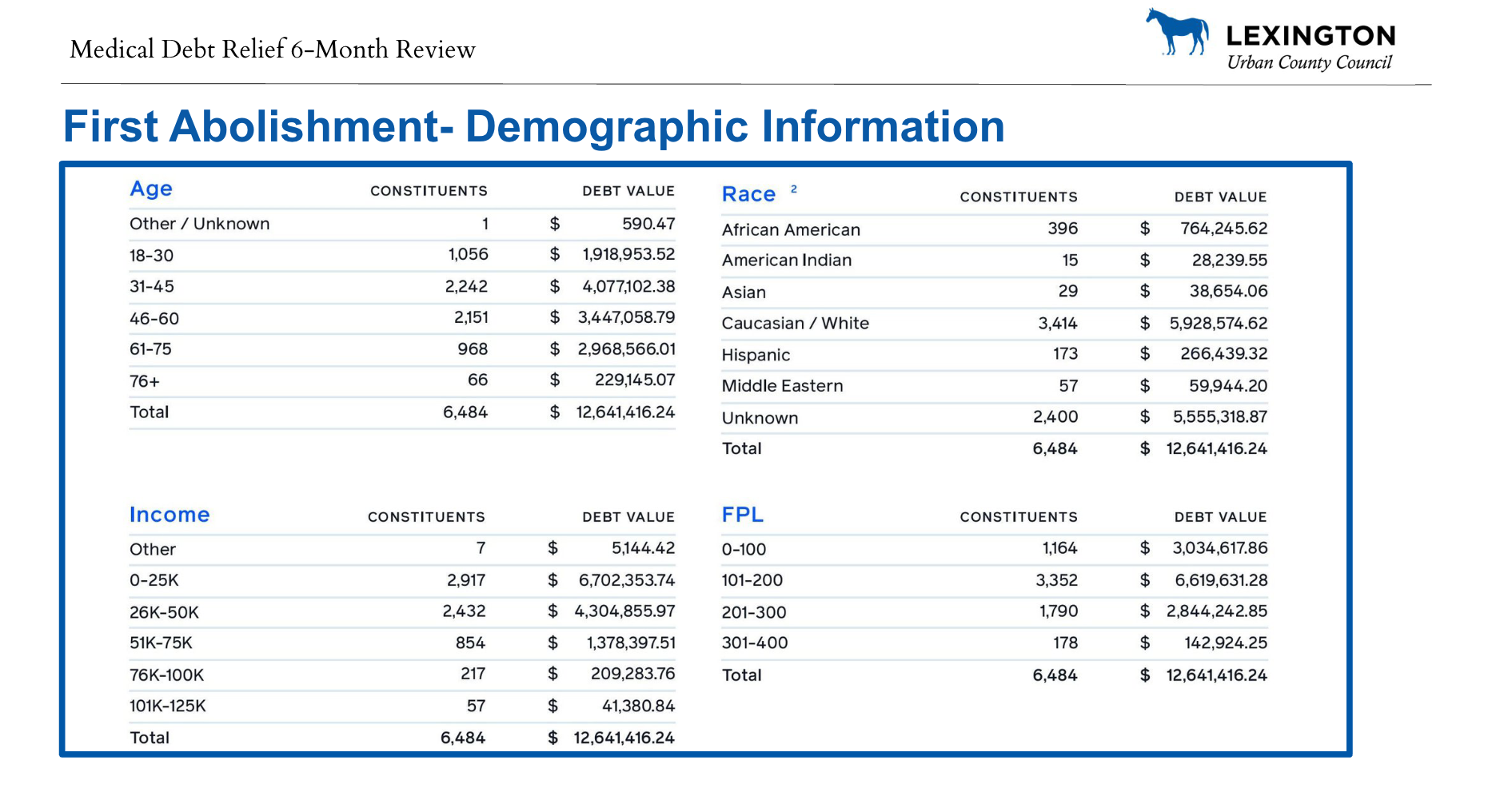
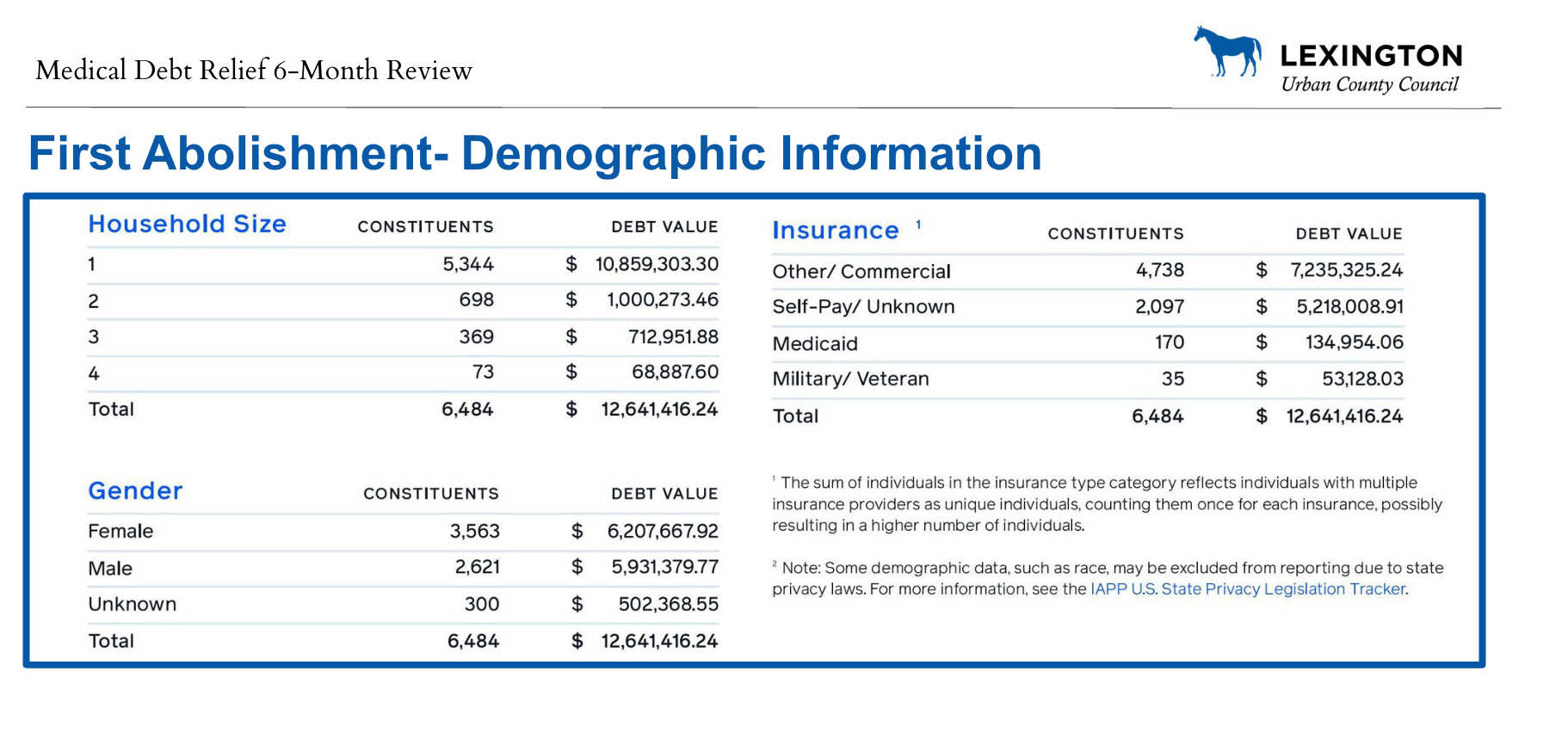
In November, LFUCG announced the program purchased more than $12.6 million in medical debt for 6,484 Fayette County residents. UMD says the cost was about $90,000, or only 0.7% of the total cost of the debt itself, bringing a 140:1 return on investment. The partnership with LFUCG still has over $900,000 left to spend.
During Tuesday’s presentation, council will receive demographic information on the people whose debts were abolished. For example, 82% of these beneficiaries earn above the federal poverty line.
Image: LFUCGImage: LFUCG
Multiple beneficiaries have also shared their responses and testimonies, which will be shared during the meeting.
If you or someone you know had their medical debt abolished in this first wave, and you want to share your story, please reach out at anabel@nextcity.org!
📺
Watch the meeting: The Council Work Session will meet on Tuesday, January 13th. You can attend in-person or watch live on live on LexTV.
Anabel Peterman is CivicLex and Next City's Rural-Urban Report Fellow. She covers stories that explore the complexities of rural-urban dynamics playing out across the Central Kentucky region.
Lexington used a $1 million public contract to wipe out millions in hospital bills. In Paducah, organizers are crowdfunding — hoping to clear a fraction of that total without city hall.
Following a fatal gas leak in Cardinal Valley, the new ordinance would require carbon monoxide detectors in all commercial and residential buildings in Fayette County.