Lexington's first Civic Assembly concludes. What did the group decide?
The randomly-selected group of Lexington residents deliberated on council pay and charter review. Its recommendations could wind up on the ballot for local voters.


The randomly-selected group of Lexington residents deliberated on council pay and charter review. Its recommendations could wind up on the ballot for local voters.

A solar energy project championed by Edelen Renewables can move forward, but a model airplane club at the site will need to relocate.
Fayette County needs about 1,200 registered voters to serve as poll workers. Elections are fast-approaching.
The randomly-selected group of Lexington residents deliberated on council pay and charter review. Its recommendations could wind up on the ballot for local voters.

Lexington's first Civic Assembly came to a close Sunday, with the group proposing changes to Urban County Council compensation and how Lexington's charter is reviewed. Local voters may get to weigh in on the group's recommendations later this year – if Council agrees to place them on the ballot.
Throughout the month, the randomly-selected group of Lexington residents has meet several times to study the issues of Councilmember compensation and charter review. They heard from experts – including Councilmembers themselves – came up with and discussed their own ideas, and finally put them to a vote.
During the Civic Assembly's final session Sunday, the group advanced the following proposals for Council pay and charter review. Based on its own rules, each proposal needed 70% of votes cast to be approved by the group.
Over the past 30 years, Civic Assemblies have been used more than 700 times around the world, such as developing policy recommendations on homelessness in Oregon. For Lexington, it's the first time residents here have taken part in the process. Some Civic Assembly members recently shared their perspectives on the experience in a series of short essays.
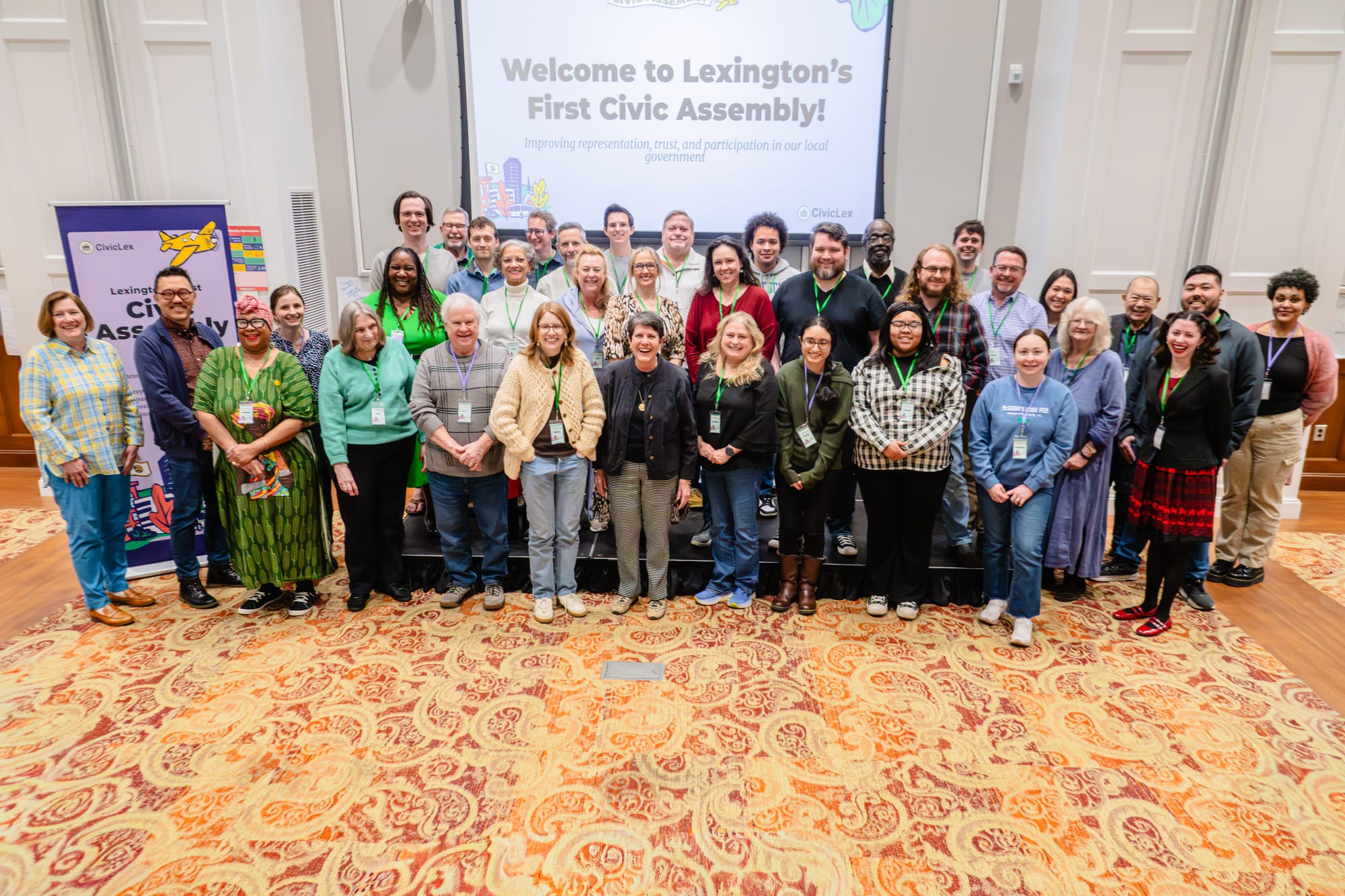
Lexington's first Civic Assembly kicked off earlier this month, bringing together a cross-section of the city's demographics selected via a lottery. The process started with 36 residents who attended sessions at Transylvania University based on their availability.
Civic Assembly participation is paid, includes stipends for childcare and transportation if needed, and any other necessary accessibility accommodations.
The initiative, organized by CivicLex, is funded independently of the local government.
The Assembly's official mandate was to examine two key questions related to Lexington's charter. They were selected after a survey of more than 870 residents. The two questions are:
Over seven sessions this month, Civic Assembly members built relationships with one another, heard from local government officials, and learned about Council compensation and the city's charter in depth.
During the last few sessions, members deliberated over their ideas, reviewed educational materials, and reviewed feedback from the public. Days 6 and 7 focused on giving members time to finalize their deliberations and decide on any proposed Charter changes they may or may not want to make.
Any changes to Lexington's charter must be approved by voters via a ballot referendum.
Lexington's Urban County Council has committed to publicly responding to any recommendations the Civic Assembly makes.
Council will also be able to vote on whether to place the proposed changes on the ballot for voters. If the changes do wind up on the ballot, they'll need a majority vote during Lexington's 2026 election to be adopted.

The Subcommittee's work may include implementing recommendations from CivicLex's Boards and Commissions Report.


We're hosting a Civic Assembly in 2026! Learn all about what this project will be.

Next City and CivicLex are thrilled to welcome Anabel Peterman as our Equitable Cities Reporting Fellow for Rural-Urban Issues!

We spent months reviewing the membership and operations of Lexington's Boards and Commissions. Here's what we learned and how we think they could be improved.